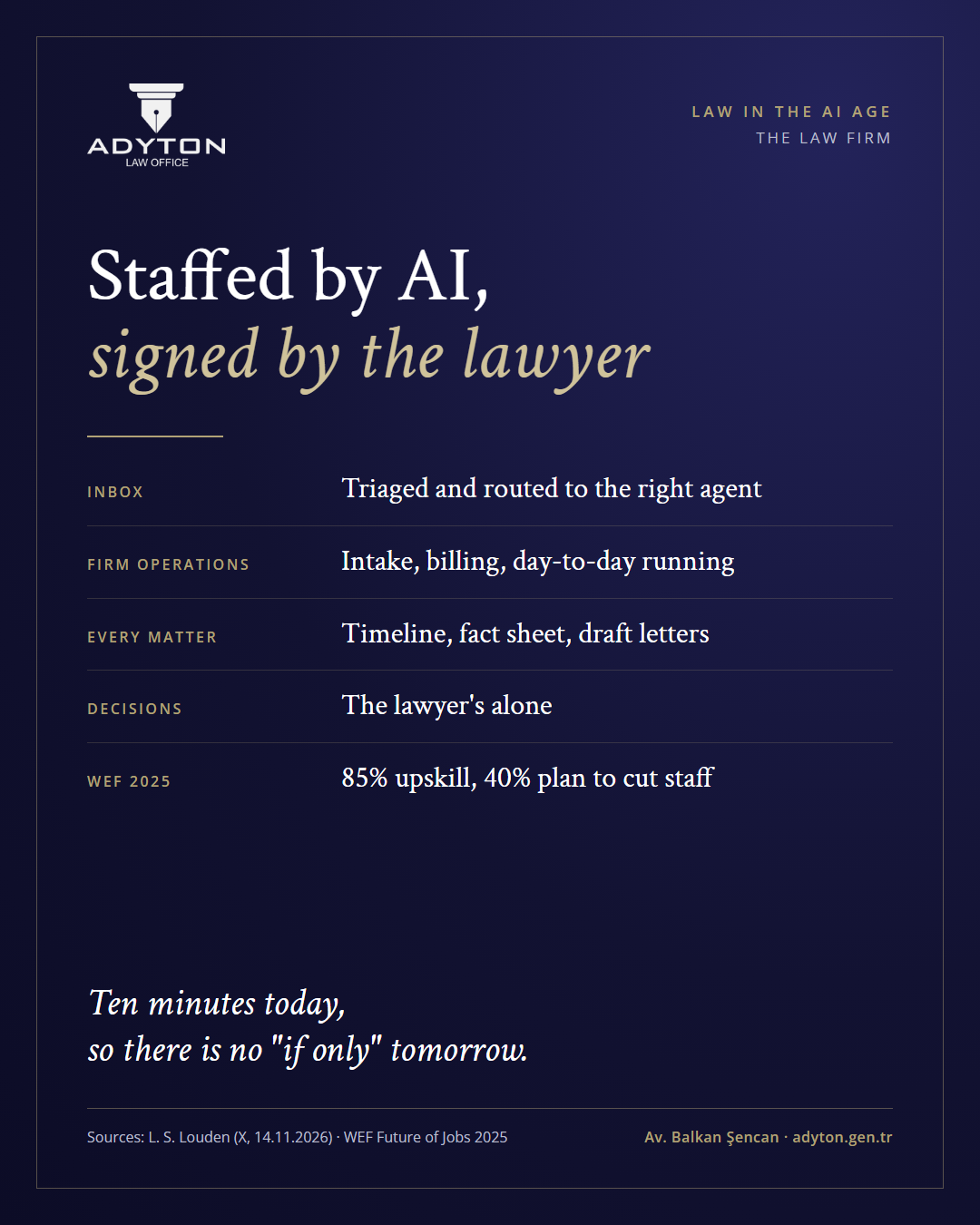
A post by US lawyer Liz Spector Louden on X, describing her law firm, drew plenty of views and comments. The reason: she is the only lawyer in her firm. Every role, from assistant to bookkeeper to the other lawyers, has been handed to AI agents she built and supervises herself.
One agent reads incoming email, sorts it by subject and sends it on to the right agent; whatever needs Louden’s personal attention and decision is flagged separately and brought to her. Client intake and conflict checks, billing and the firm’s day-to-day running sit with separate agents. Every matter has its own agent as well: it reads the file from start to finish, builds the timeline and the fact sheet, and drafts the letters that go to the client. By Louden’s count, this workflow would take five or six people in an ordinary firm.
The one thing she has not left to AI is making decisions. Which clients to take on, what advice to give, which strategy to follow and every word said in a negotiation are hers to decide. Not a single line goes to a client or a third party until she has read and approved it.
The effort and cost side of the work comes down to running these agents together like a well-tuned orchestra, and paying a considerable sum for them every month. Thinking through the parts of the work and building the setup around them, and spending hours every day talking to the agents and correcting their mistakes, are part of the process too. The decision-making stage is a separate source of mental fatigue and stress.
I suspect this experience will feel familiar to many of us who have brought AI into our work and personal lives; for those who keep working the traditional way, it is hard to grasp. And if you ask what you end up with, I can say plainly from my own experience: an incredible gain in productivity, fewer mistakes, more personal time and less stress.
In the World Economic Forum’s report of January 2025, 85% of employers say they will prioritise upskilling their workforce, while 40% plan to reduce staff whose skills are becoming less relevant. As more of our colleagues put AI to effective use in their work, law firms will shrink; the number of one-person-army lawyers who take on work beyond their own field and do it with greater competence will grow by the day. Colleagues who cannot keep pace with this change will find it harder to get work, regardless of their seniority and experience, because the expectations of clients, individual and corporate alike, will shift in the same direction.
AI brings both threat and opportunity with it; what matters is how we approach it: following developments closely and acting without wasting time. There is no need to overhaul our whole way of working or to panic; every day we can take hold of one part of the subject and take a step. Ten minutes of thought today, so that we do not say “if only” tomorrow, will do everyone good.
Sources
- Liz Spector Louden on how her one-lawyer firm runs with AI agents (X, 14.11.2026)
- Liz Spector Louden’s six steps for building a similar setup (X, 22.11.2026)
- World Economic Forum, The Future of Jobs Report 2025 (07.01.2025)
Originally posted on LinkedIn.