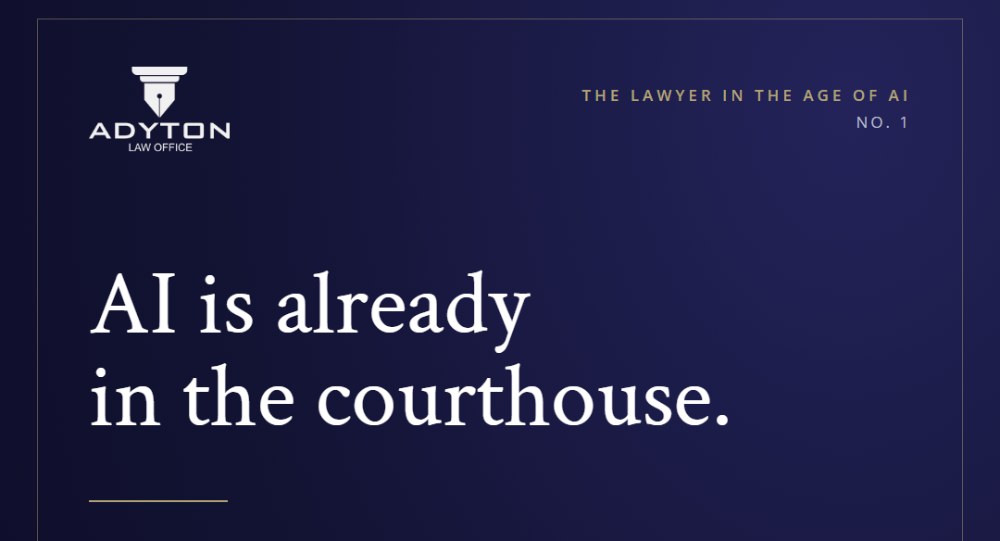
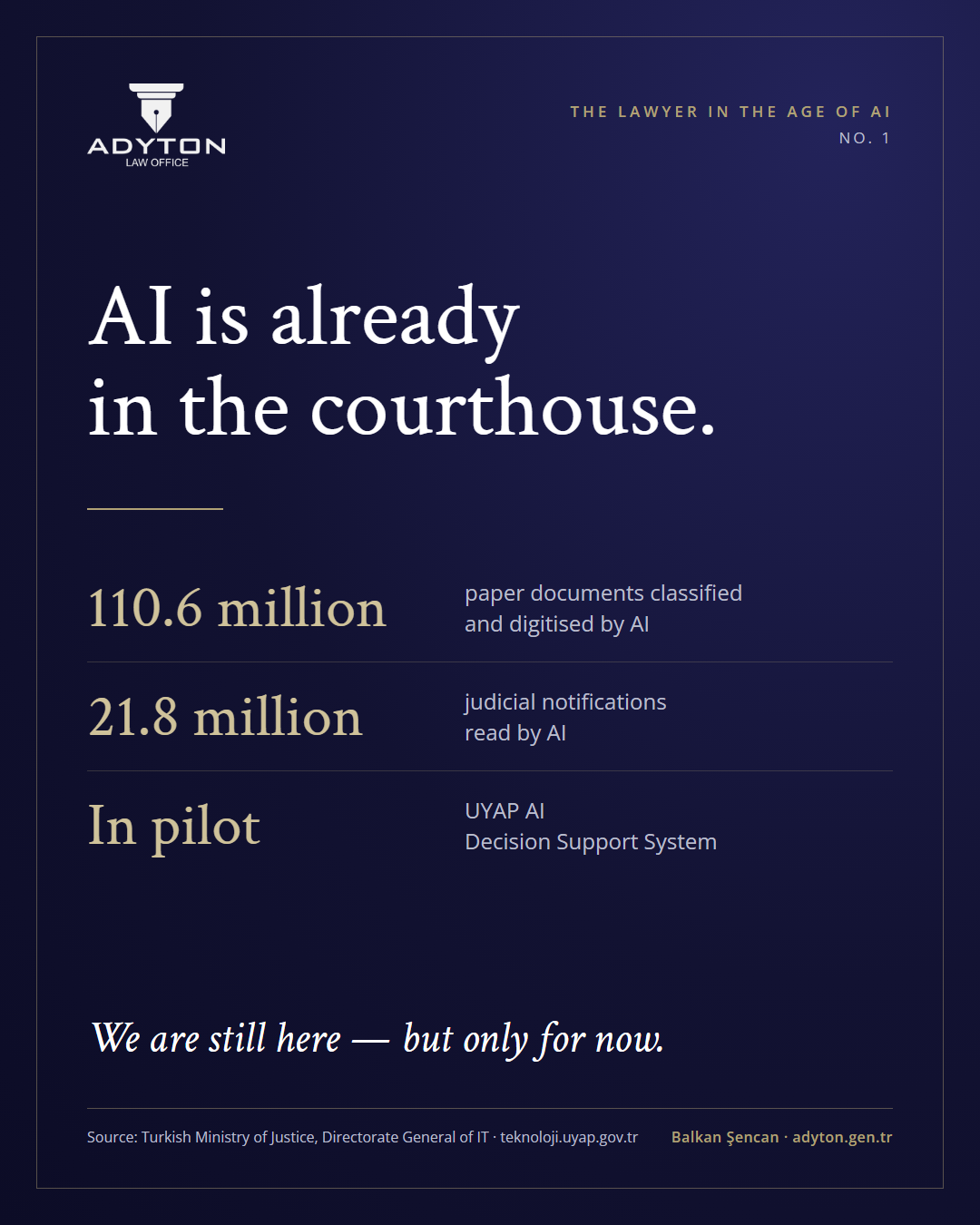
AI has already entered the courthouse; we just haven’t noticed.
According to figures released by the Ministry of Justice’s Directorate General of Information Technologies, AI in UYAP, Turkey’s National Judiciary Informatics System, has so far classified and digitised more than 110 million paper documents, and since 2024 it has extracted information from 21.8 million judicial notifications. A model is in use that suggests which chamber a case file reaching the regional courts of appeal belongs to. The “Prosecution Organisation Prediction Project”, announced in June, analyses the information in a file to predict which organisation the file may be linked to. The “UYAP AI Decision Support System” is at the pilot stage.
When I talk to colleagues about this, I hear the same concern: “What will become of our profession in a year or two? Will we be able to keep doing our work the same way?” I tell everyone the same thing: let us be concerned, but there is no need to panic as long as we prepare well for these developments.
The question is not “Has AI reached the point where it can take our jobs?” That has long been answered: “Yes, it has.” But the questions “For whom?” and “What do we need to do about it?” still await answers.
The responsibility is ours. Article 34 of the Attorneyship Law requires us to carry out our work “with diligence, integrity and honour”. AI applications guide us, review draft petitions and contracts, and write for us; but it is we, not the AI, who finalise those drafts, sign them and take responsibility for them. Finding the rules applicable to a dispute has become easier. Determining, with our professional expertise and experience, how those rules apply to the dispute before us is still our job.
The key point is this: among the figures released by the Ministry are success rates of around 70 per cent. In other words, the accuracy of some of these models is still well below the ideal. Checking and correcting the gaps and errors that AI applications leave in the file before us, and overseeing the resolution of the dispute, remains the core task of the lawyer.
That is why it is important to:
- verify every precedent and every statutory provision that an AI application produces against its original source;
- know which AI model we give the information and documents about a dispute to, and in what context;
- where necessary, work with RAG systems (systems that ground their answers in real documents) or with AI applications that use such technologies, to minimise the risk of AI errors;
- never delegate our judgement, and never give approval as a mere formality;
- devote the time we gain through AI applications to building strategy and reviewing the file;
- treat AI literacy as a professional skill, and keep improving ourselves through continuous training.
In the coming weeks, I will take up each of these points in turn.
Let us recognise these developments and adapt to them. We are still here — but only for now.
Sources
- UYAP Technology – “Artificial Intelligence” section (Ministry of Justice, Directorate General of Information Technologies; in Turkish) – figures on document classification, judicial notifications, chamber assignment and success rates
- Directorate General of Information Technologies announcement of 24 September 2026 (in Turkish) – UYAP AI Decision Support System “still in pilot”
- Directorate General of Information Technologies post of 25 June 2026 on the Prosecution Organisation Prediction Project (X, in Turkish)
- Attorneyship Law No. 1136, Article 34 (official Turkish text, mevzuat.gov.tr)
Originally posted on LinkedIn.